Lost Creator Academy Review 2026: Is It Worth $497?

This post may contain affiliate links which means we make a commission at no extra cost to you
Lost Creator Academy: My Quick Verdict
Rating: 4.5/5
Price: $497 one-time or 3 x $197 per month
Best for: Travel photographers, bloggers, YouTubers and creators who want to turn content into income
My experience: Joined in 2021
Would I buy it again? Yes
Did it pay for itself for me? Yes, several times over
Biggest strength: Brand deals + business education + community
Biggest weakness: There's a lot of content, and you still have to execute.
→ Check out Lost Creator Academy
I've been inside Lost Creator Academy since 2021. The reason I'm still recommending it isn't that it taught me how to take pretty pictures. It's because the business and brand-deal resources helped me turn my content skills into actual opportunities.
My experience: I joined in 2021
I’ve followed Lost Leblanc since 2016, I believe. That was when I started travelling the world more often and experiencing the digital nomad lifestyle.
His travel guides were my reference anytime I’d travel to a new country. I then had the opportunity to meet him for real when he passed through Dublin, Ireland, back in 2017.

When I enrolled in Lost Creator Academy in February 2021, I wasn't a complete beginner to digital marketing. I had spent over a decade working inside tech companies like Yahoo, Meta, Google, and Square, managing multi-million euro ad accounts and product marketing launches.
Working on the corporate side of advertising spend convinced me early on that content creation wasn't just a trend, it was a real, highly lucrative industry with genuine financial opportunities. Fast forward to today, and the global creator economy is estimated at over $310 billion in 2026, with brands continuously redirecting traditional advertising budgets toward independent creators and authentic storytellers.
I knew the money was there and understood how corporate brand budgets operated. But turning my own travel photography and content into a predictable creator business while balancing family life in Ireland was a completely different challenge. I needed a practical, repeatable system for pitching brands, negotiating rate cards, and structuring visual content efficiently.
What I Actually Used From Lost Creator Academy
I’ve been a member of Lost Creator Academy since February 2021, so I’ve had plenty of time to figure out which parts of the program actually made a difference for me and which parts I barely touched.
The biggest value for me wasn't consuming every lesson from beginning to end. It was finding the parts that solved a problem I was dealing with at the time and putting them into practice.
The first thing I used extensively was the brand-pitching templates. They gave me a much easier way to approach brands without sitting there wondering what on earth I was supposed to say. I used them to pitch companies, understand how to position what I could offer, and become much more comfortable reaching out directly.
That last part is probably more important than it sounds. When I first started, there was definitely some imposter syndrome involved. You look at a big brand and think, "Why would they want to work with me?" LCA helped me understand that you don't necessarily need hundreds of thousands of followers. You need to understand what you can offer a brand and actually have the confidence to ask.
That led to collaborations and opportunities with companies including Oppo, Huawei, Toyota Ireland, Moment, Luminar, Adobe and others. Some involved payment, while others involved products, experiences or accommodation.
The photography and videography sections were also particularly useful for me. I already had experience with photography, so I wasn't starting from zero, but the training helped me develop my skills further, particularly around video production and editing. I also got value from the drone section.
The videography training ended up opening an unexpected door for me. I became a wedding videographer in Dublin after connecting with a wedding photographer, and I ended up doing wedding videos for around two years. It became a genuinely interesting side business.
Eventually, I stopped doing it because I realised something important about myself: I enjoyed shooting far more than I enjoyed editing. Video editing can take a huge amount of time, especially when you're doing it alongside everything else. At that point in my life, I simply didn't have enough time to justify spending hours editing wedding footage.
Still, that experience was valuable. LCA didn't magically turn me into a successful videographer overnight. It gave me skills that I was able to take into the real world and turn into an opportunity.
What LCA helped me achieve
Looking back at the last few years, LCA helped me in three areas: pitching brands, developing my creative skills, and becoming more confident about turning content creation into paid work.
The brand-pitching side probably had the most immediate impact. Before LCA, contacting a large brand could feel intimidating. You can spend a lot of time thinking, "Why would they want to work with me?" LCA gave me a framework for identifying relevant brands, finding the right people to contact and putting together a professional pitch.
I was already active on Instagram at the time, so I combined what I was learning with the content I was creating. Rather than waiting for brands to discover me, I started identifying companies I wanted to work with and reaching out to them directly.
That led to collaborations with brands including Huawei, Oppo, Toyota Ireland, Moment, Luminar, Adobe and others. Some of these opportunities were paid, while others involved products, accommodation or experiences.
The paid work alone has made a meaningful difference. My collaborations with Huawei and Oppo generated several thousand euros in commissions, while the photography and videography work I took on later generated well into five figures over two years.
I don't share those numbers to suggest that buying LCA automatically leads to that kind of income. It doesn't. I had existing photography, marketing and content skills, and I still had to do the work.
What LCA gave me was a better understanding of how to package those skills, approach potential clients and actually ask for the opportunity.
The videography training was another unexpected win. I used the photography, videography and Final Cut sections to improve my skills, and that eventually opened the door to working with a wedding photographer in Dublin. I ended up shooting around ten weddings over roughly two years.
I eventually stopped because I realised that I enjoyed shooting much more than editing. Wedding video editing is incredibly time-consuming, and I didn't have the time to make it worthwhile alongside everything else I was doing.
But that's actually one of the things I like about looking back at my LCA experience. Not every experiment became a permanent business. Some opened doors, taught me something new and helped me understand what I actually wanted to do.
What Didn't Matter Much to Me
Of course, I didn't use every part of Lost Creator Academy equally.
YouTube was probably the biggest example. I'm primarily a blogger and photographer rather than a YouTuber, so I never really went all-in on building a YouTube channel.
That said, I still found parts of the strategy useful. Things like creating thumbnails, understanding what makes someone want to click, and thinking about how you package content are useful beyond YouTube. The same principles apply to blog posts, Pinterest graphics and social media content.
The creative basics were another area I didn't need as much. I already had a reasonable amount of experience with photography and content creation when I joined LCA, so some of that material was more of a refresher than a revelation.
And that's something I'd keep in mind before buying the program: you don't have to use everything.
If you're already experienced in photography, for example, you may get far more value from the business, pitching, branding or community sections than from the introductory creative lessons.
What I Wish I'd Known Before Buying
Honestly, there's nothing major I wish I'd known before joining.
The one thing I would have liked to understand beforehand is just how much content there is to get through.
Christian goes into a lot of detail across the different sections, and that's ultimately a good thing. You're not paying for a handful of short videos and a motivational speech. There is a lot of material to work through.
But that also means you need to put the time in.
If you're expecting to buy LCA on Monday and start making money by Friday, you're probably going to be disappointed. The course gives you information, frameworks and tools, but you still have to actually use them.
Personally, I'd rather have too much useful information than pay a significant amount of money for a course that scratches the surface of everything. The depth is one of the reasons I still think the program was worth what I paid for it.
Would I Spend $497 on Lost Creator Academy Again?
Yes. Without much hesitation.
And I think that's probably the most useful conclusion I can give you after being inside LCA since February 2021.
I paid around $800 when I joined, so I actually paid considerably more than the current $497 price. Even knowing what I know now, I'd still make the same decision.
I've used the brand-pitching templates to approach companies. I've developed my photography, videography and editing skills. I've landed paid brand work, created collaborations, received products and stays, and built a side business shooting weddings.
Some of those opportunities generated money. Others didn't. Some gave me experiences or products instead. And some simply taught me that a particular type of work wasn't something I wanted to do long term.
That's still a return on the investment in my view. But if I had to pick one thing that makes me willing to recommend LCA again, it's the community.
The training gave me knowledge. The templates gave me something practical to use. The community gave me people I could learn from and collaborate with.
And perhaps the most important thing LCA changed for me was my mindset around pitching.
I stopped thinking, "Why would this brand want to work with me?" and started thinking, "What can I create that would be useful to this brand?"
That's a much more productive question.
So yes, I'd spend $497 on LCA again today.
Just don't confuse buying the course with doing the work. LCA gave me the tools and confidence. I still had to send the emails.
The 2026 Curriculum Breakdown: What You Actually Get Inside LCA
The academy is divided into six core pillars, alongside two newly introduced 2026 training modules:
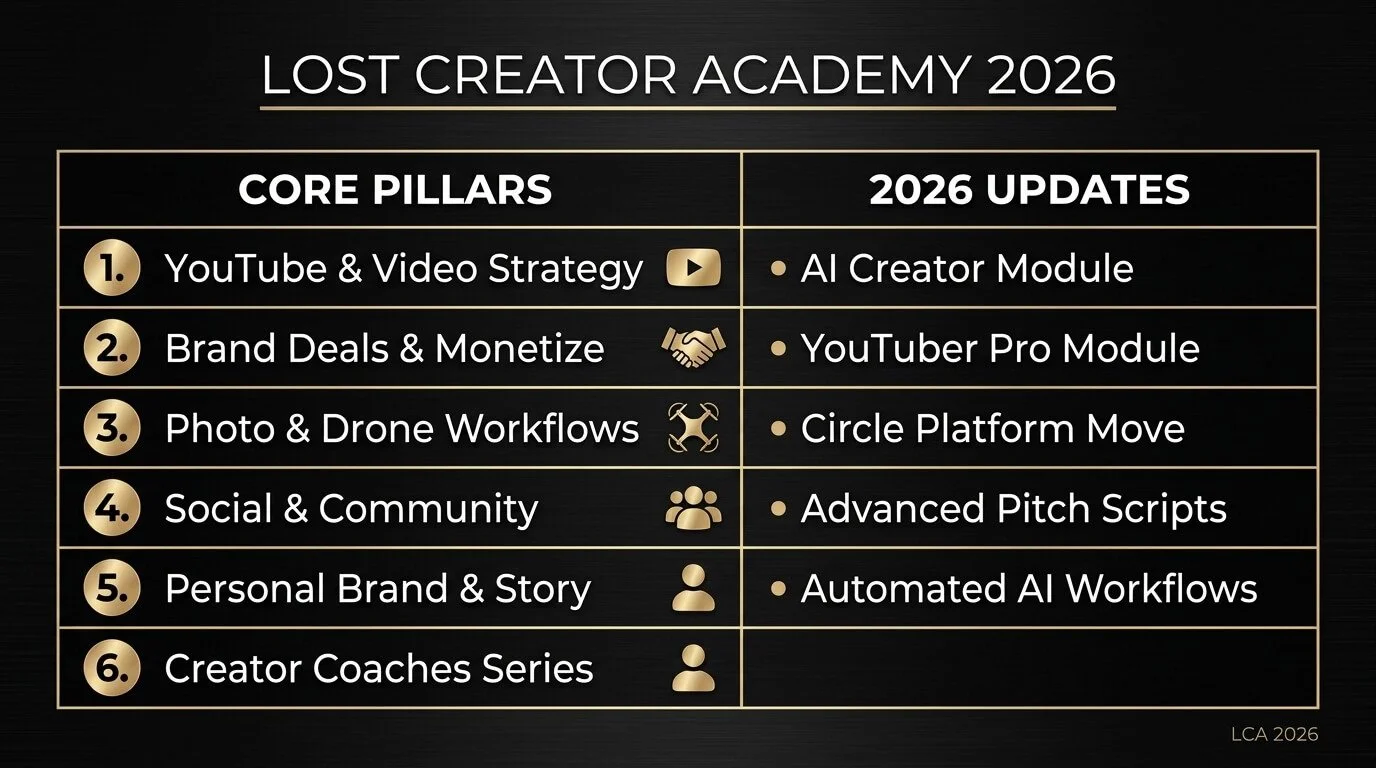
Lost Creator academy review - Online course syllabus
As mentioned earlier, you get access to more than 100 hours of video resources covering topics related to photography, videography and business tips to run your business.
Additionally, you get access to downloads/templates and an online community of more than 5000 members based all around the world.
Module 1: YouTube & Video Strategy
Teaches hook design, storytelling structures, title and thumbnail packaging, retention curve optimization, and post-production workflows in Premiere Pro and Final Cut Pro.
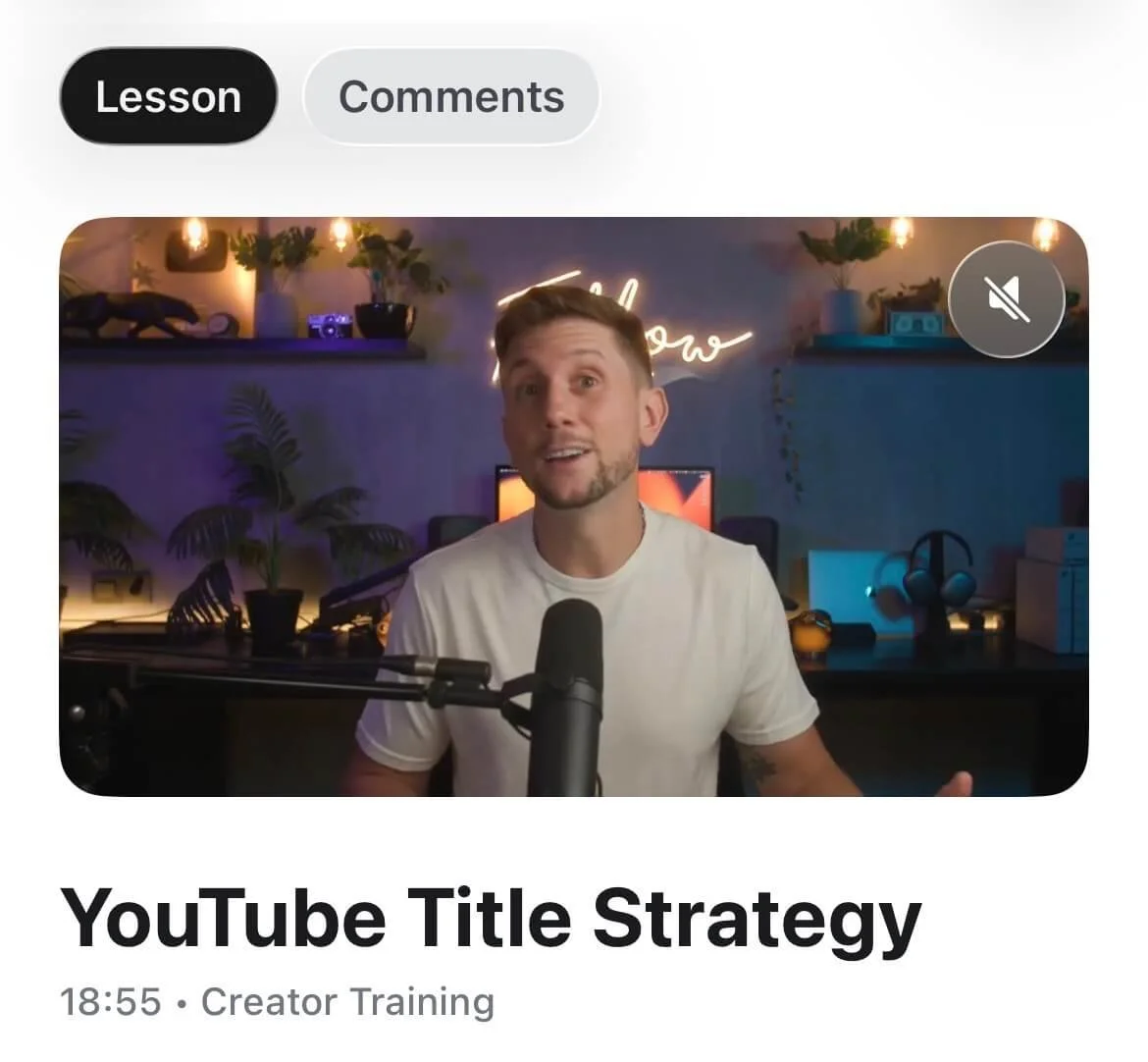
YouTube is a much bigger part of Lost Creator Academy than my own experience might suggest.
A lot of creators join LCA specifically because they want to build a YouTube career, and there is a substantial amount of training around YouTube strategy, storytelling, thumbnails, retention, video production and channel growth.
I'm actually not a YouTuber.
My main platform has historically been my blog, supported by photography and social media. So I didn't use the YouTube-specific training to build a YouTube channel in the way many other LCA members have.
However, I still found a surprising amount of the strategy relevant to blogging.
The underlying principle is the same: get someone to click, keep them interested and give them a reason to continue consuming your content.
For example, learning about thumbnails helped me think differently about how I package visual content. The same thinking applies when creating a Pinterest graphic, choosing a featured image for a blog post or writing a headline designed to make someone click.
Storytelling and retention principles also translate surprisingly well to written content. A blog introduction has the same basic job as the opening of a YouTube video: convince someone that staying is worth their time.
So while I wouldn't say I personally got the full value from the YouTube side of LCA, I also wouldn't dismiss it if you're a blogger or photographer.
If YouTube is your primary goal, you'll probably get considerably more value from these sections than I did. And if your goal is to become a YouTuber, this is one of the areas of LCA I'd pay particular attention to.
Module 2: Brand Deals & Monetization

Includes 10+ battle-tested email templates, negotiation frameworks, rate calculators, and pitching scripts for hotels, tourism boards, and global tech brands. For me, LCA paid for itself. I used the outreach templates to land opportunities with brands including Adobe, Moment and others. The brand-deal templates were one of the most valuable parts of LCA for me.
If your goal is to start pitching brands rather than waiting for brands to discover you, this is the part I'd pay particular attention to.
→ Check out Lost Creator Academy
Module 3: Photography & Drone Workflows
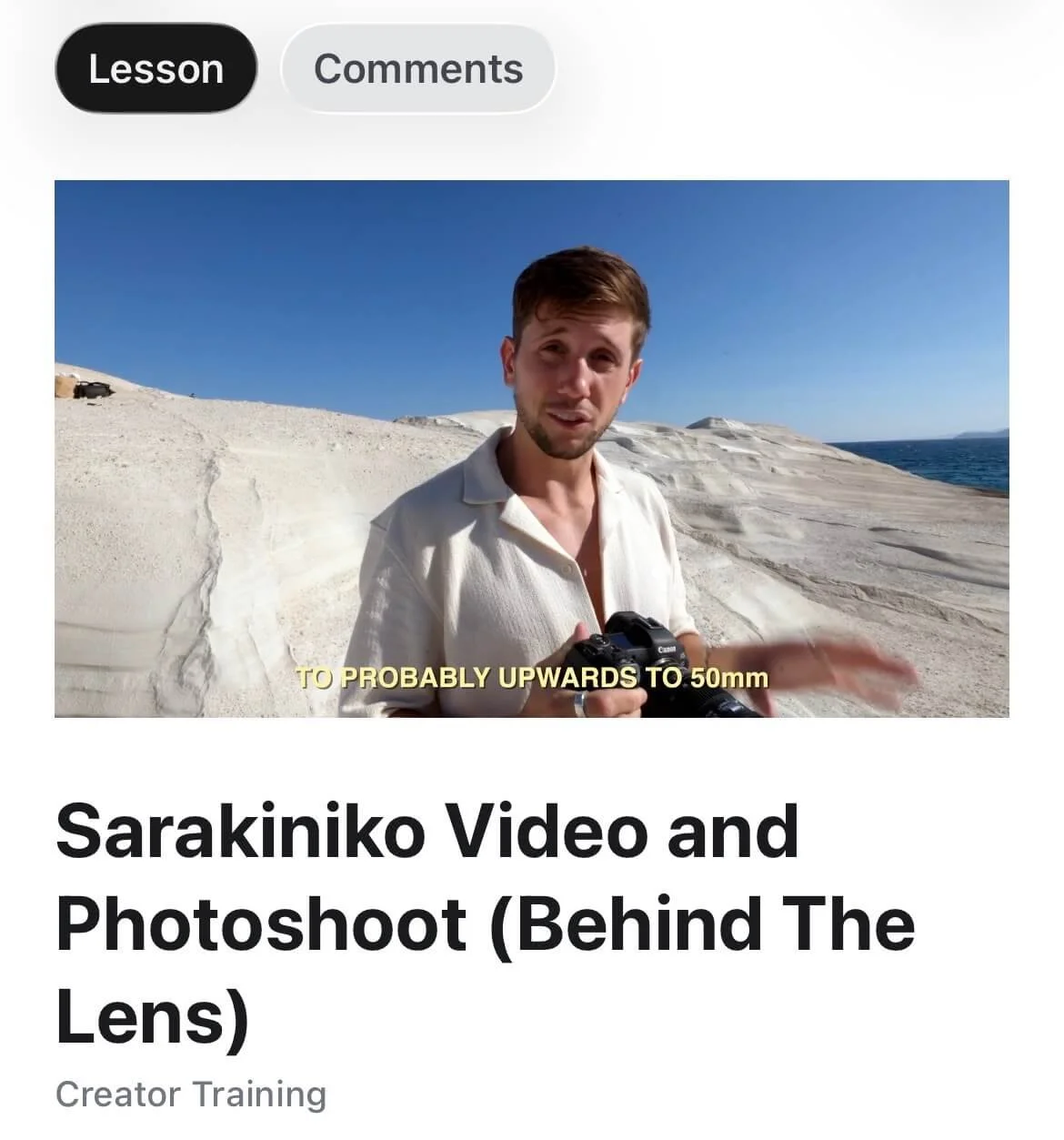
Covers manual camera settings, composition, lighting on location, drone flight safety/editing, and Lightroom colour grading techniques. It also includes behind-the-scenes of shooting for brand deals that are very insightful.
Module 4: Social Growth & Community Building
Focuses on short-form video (Reels/Shorts) designed to drive email signups and brand discovery rather than vanity metrics.
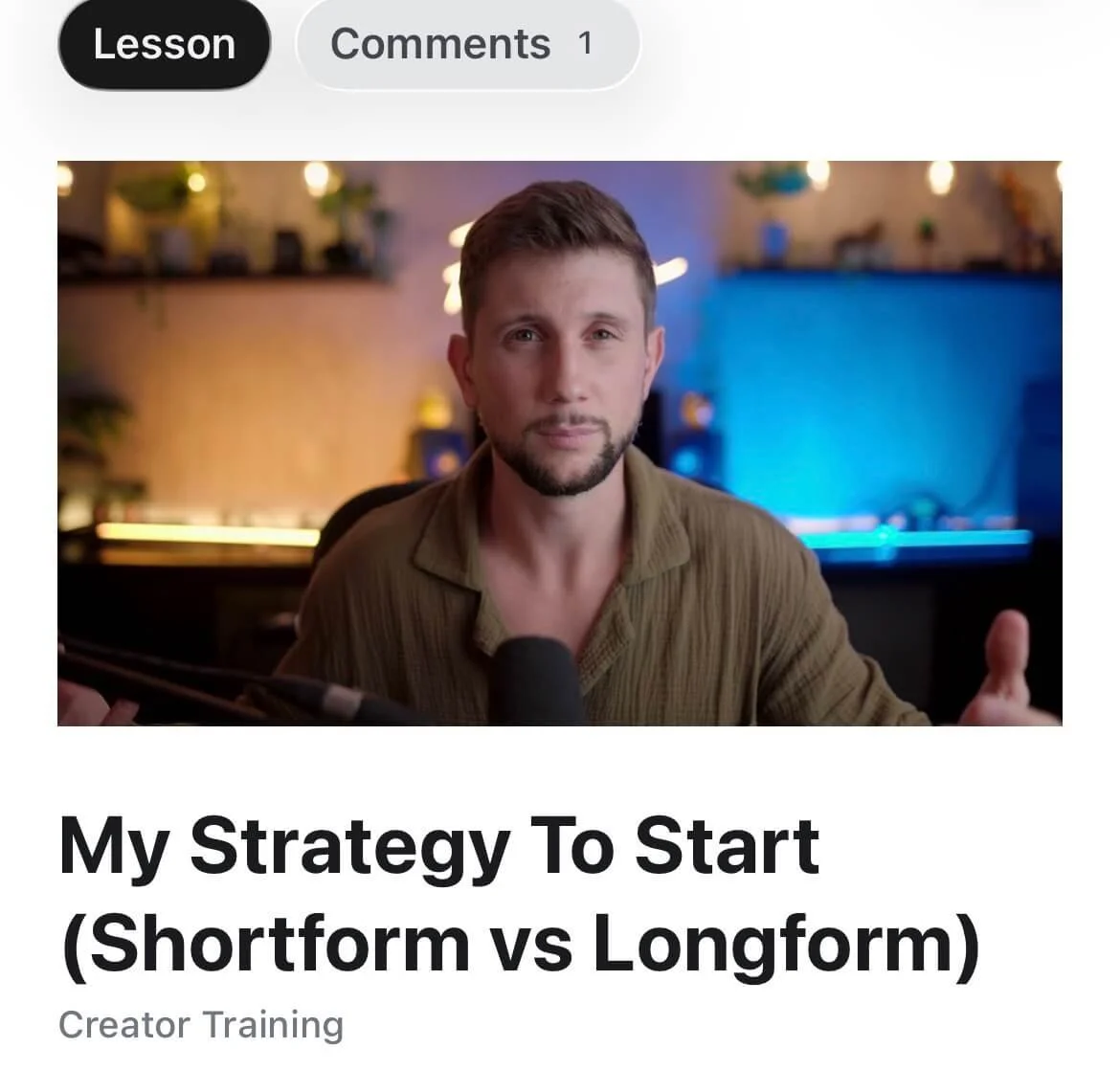
Module 5: Storytelling & Personal Branding
How to define your visual style, find a distinct perspective in crowded niches, and build an audience that trusts your recommendations.

Module 6: AI Creator Module (2026 Addition)
Shows how to integrate AI tools (like ChatGPT, Claude, Google Gemini and NotebookLM) into your scripting, outline generation, and repurposing pipeline. It emphasizes using AI to eliminate admin work so you can spend more time creating or with family.
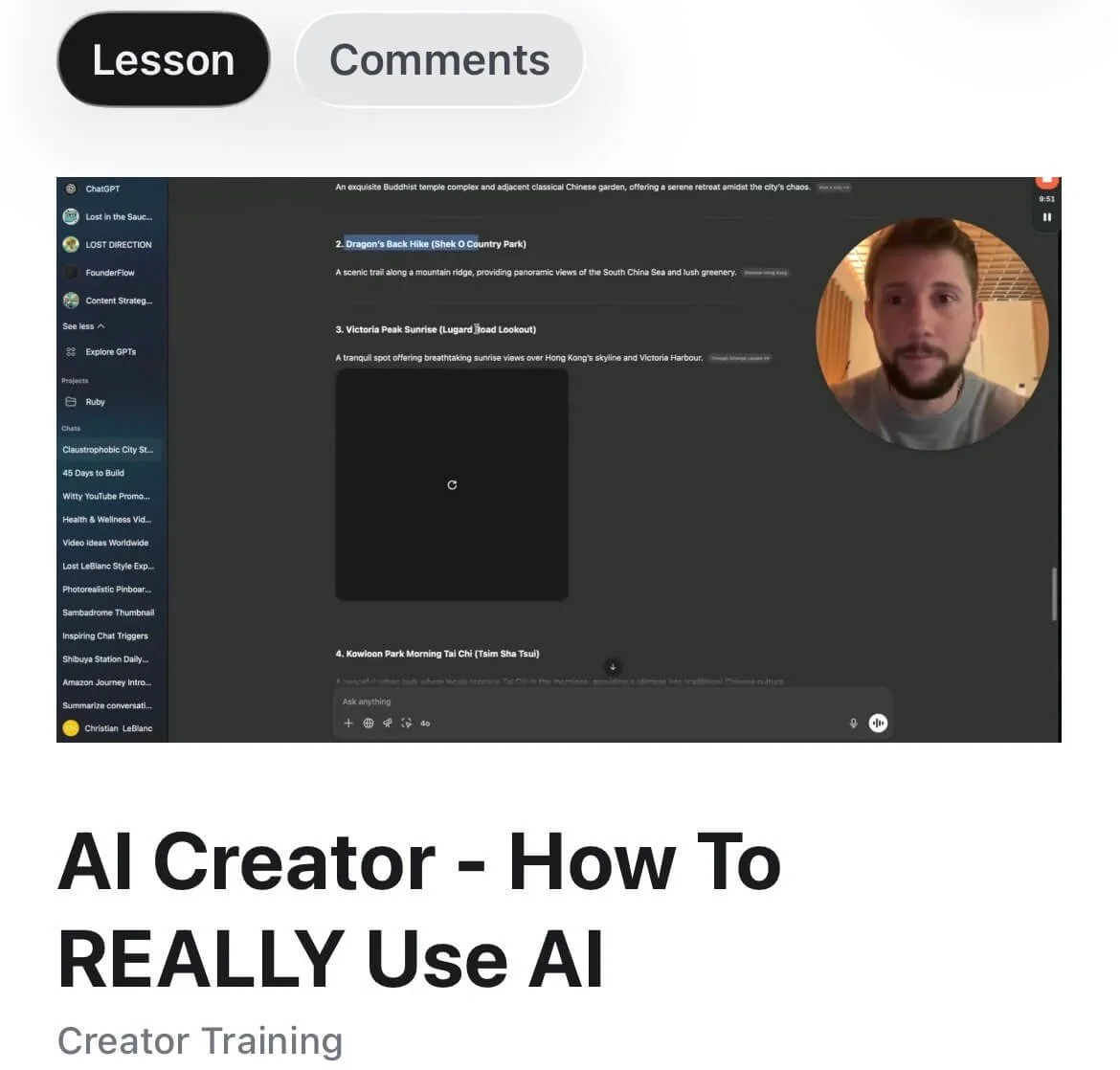
Module 7: YouTuber Pro Module (2026 Addition)
Advanced channel growth strategies, deep algorithmic breakdown, and case studies analyzing high-retention videos.
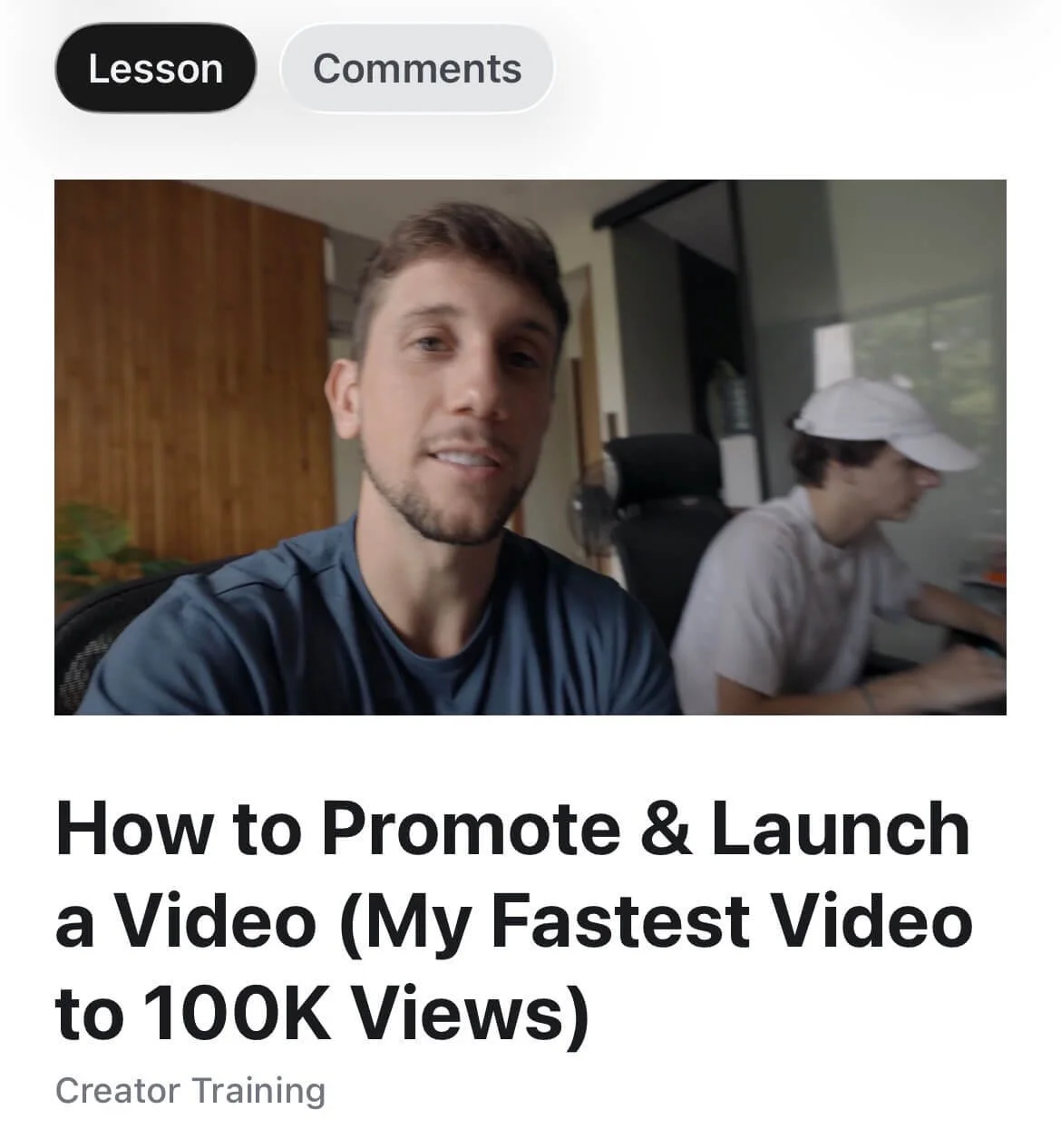
Overall, the goal is to give creators a broad foundation across the creative and business sides of content creation.
Even though you can go through the course in no particular order, if you are a beginner, I'd advise you to follow it step by step, as Christian really discussed brand-building strategies in detail and how to create several sources of income to help you understand the whole world of being a professional content creator. Some videos will recall parts of previous ones.
A bonus I really enjoyed that has been added to the academy is the Creator Coaches module, which includes workshops from other famous and not-so-famous online creators who share their expertise.
How to level up your gimbal movements
Advanced level drone photo editing
How to revive a colourless photo
and more
No one can be great at everything. Being able to learn from other experts in the community is another useful addition to the program.
Downloads and templates
In addition to all the video resources, you also get access to the exact templates Christian uses nowadays to land brand deals.
There are currently 10 unique email templates that you can leverage to reach out to your favourite brand or hotel you’d like to work with.
These templates are among the resources I've found most useful because they gave me something practical I could immediately use and landed me some brand partnership opportunities.

You also get access to:
Freelance photo and video pricing calculator. If you're new to content creation and aren't sure what to charge, the pricing calculator gives you a useful starting point.
Instagram and YouTube post/video pricing calculator. Wondering how much you should charge to publish a post, a story, or a reel from a brand collaboration? Just enter your latest post’s likes and your follower count, and this formula will populate the right price for you.
Lost Leblanc’s Media kit. In the world of social media and influencing, your media kit is like your CV or portfolio. Seeing what a professional media kit looks like is really helpful to understand the metrics that matter and need to be shown.
Goals template
Recommended equipment list
Video editing resources and hotkeys
The Lost Creator Community: The Biggest Long-Term Benefit for Me
If you asked me what the single biggest reason I'd recommend LCA after being a member since 2021, I'd probably say the community.
The course contains a huge amount of useful information, but information is something you can find everywhere these days. Having access to a community of people who are actually creating, pitching brands, making videos, taking photographs, blogging and building businesses is much harder to replicate.
I've asked questions about content creation, brand pitching, photography, video and blogging, and there has usually been someone with relevant experience willing to help.
That's particularly useful when you're working independently. Most people around you probably don't understand why you're spending your evening editing a video, pitching a hotel or trying to figure out why nobody is clicking your latest piece of content.
LCA gives you a place where those things are completely normal.
The community also goes beyond questions and answers. There are regular activities such as Edit & Chill, where creators can jump on a Zoom session, work on their photos or videos and hang out with other members. There are also networking sessions where you can meet several creators in a short period of time, as well as opportunities for members in similar locations to meet in person.
I've also found the community particularly useful because it's international. You have photographers, filmmakers, bloggers, YouTubers, Instagram creators and freelancers working in different countries and different niches.

That creates opportunities that you simply wouldn't get from a video course sitting on your own.
And that's why I wouldn't judge LCA purely by the number of hours of training you get.
For me, the real value is the combination of the training and the people around it.
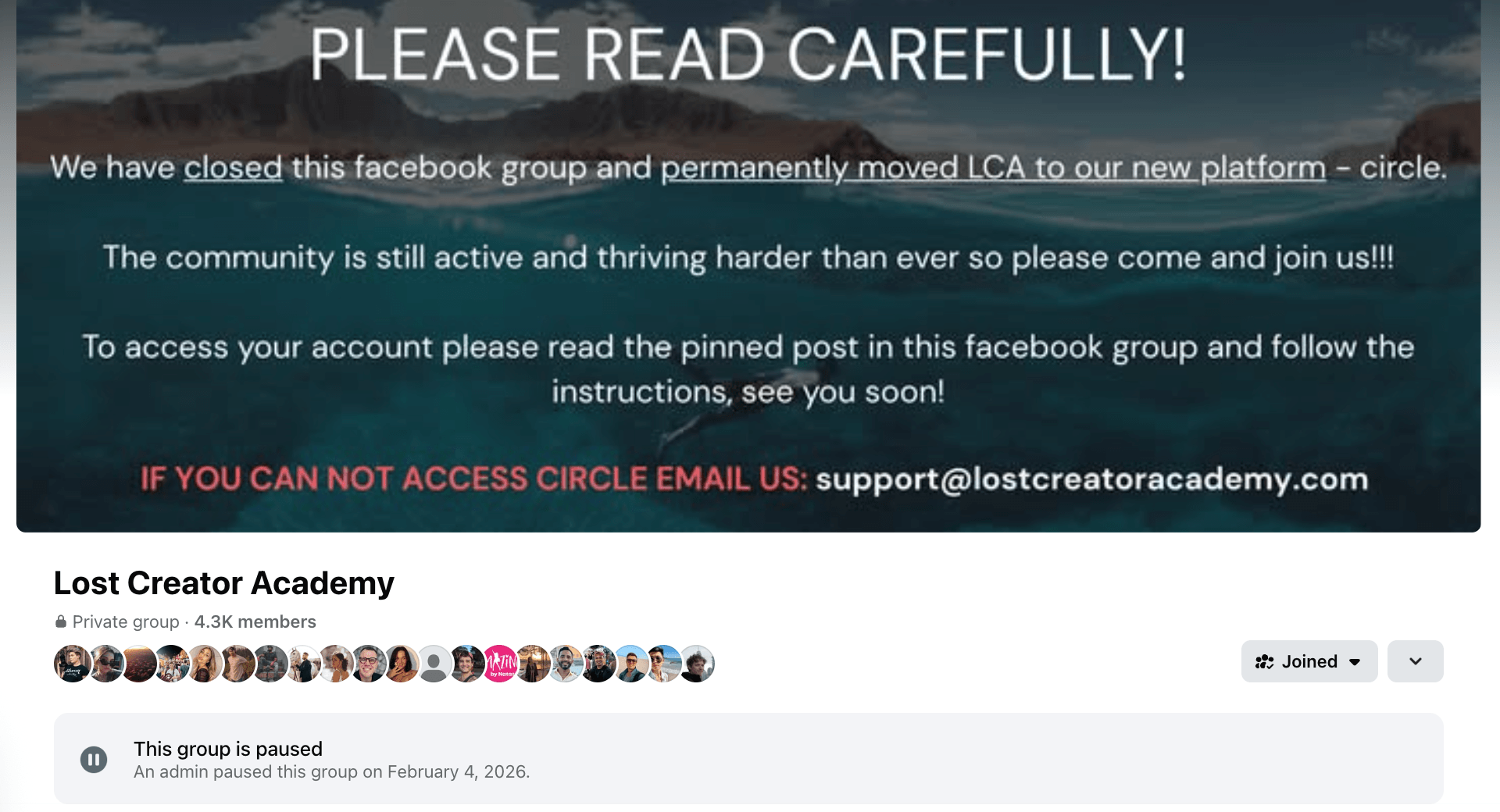
In 2026, Lost Creator Academy officially migrated its member community from Facebook Groups to Circle. As someone who builds systems to reduce mental load, this update was a major structural improvement.
Why Circle Beats the Old Facebook Group:
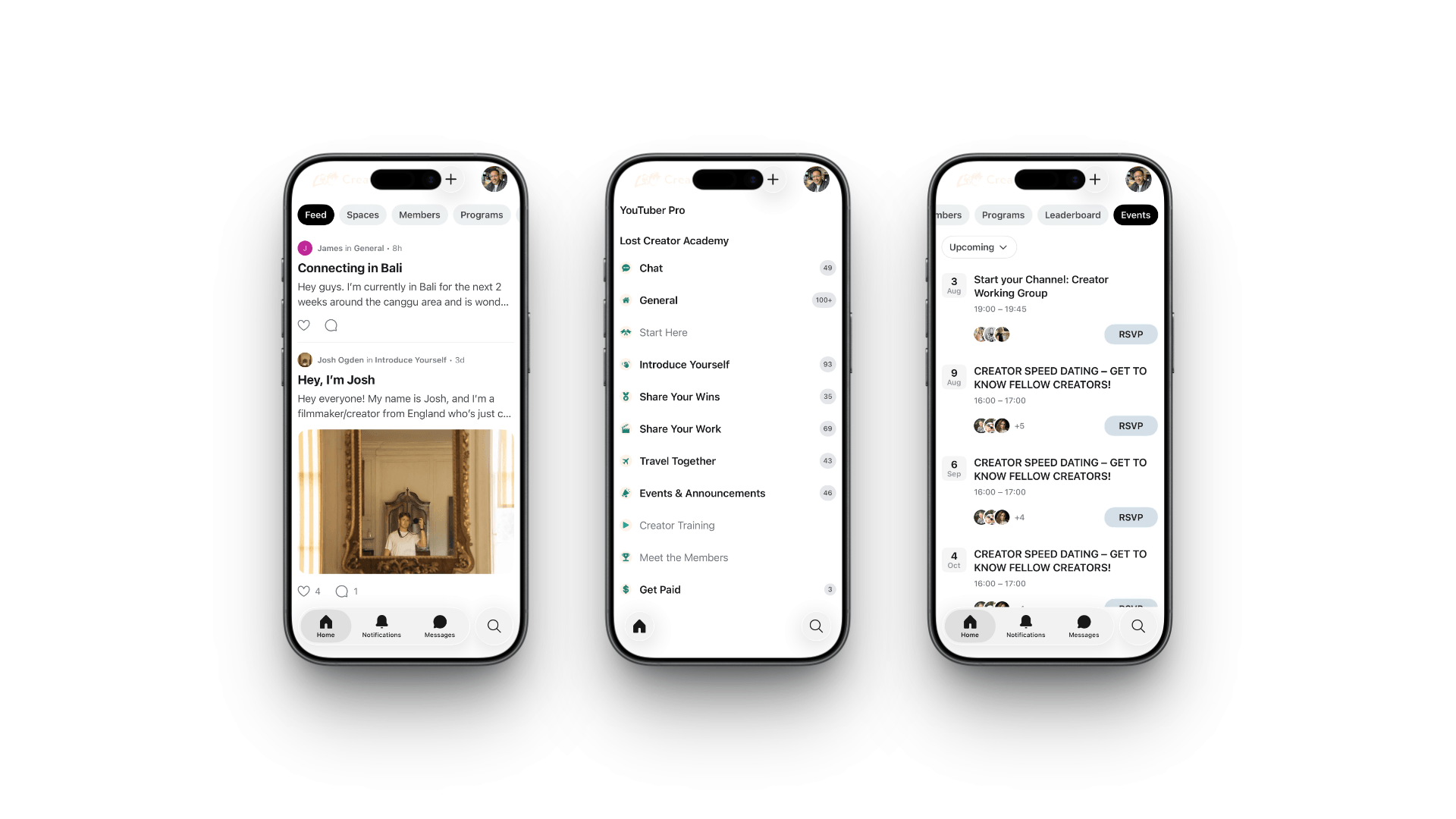
All-in-One Dashboard: Courses, live event calendars, discussion rooms, and resources live in one clean interface without social media distractions.
Organized Spaces: Dedicated channels for video feedback, brand deal reviews, travel meetups, and gear recommendations.
Better Search & Resource Tracking: Templates and past coaching calls don't get lost down an algorithmic feed.
How existing members migrate: Go to lost.community, click "Forgot your password?", and enter the email address tied to your LCA account. Access remains 100% free with lifetime access intact.
Pros of Lost Creator Academy

Extensive training: There is a lot of material covering the creative and business sides of content creation.
Excellent brand-pitching resources: The templates, pricing tools and pitching guidance were some of the most useful resources for me personally.
Photography and videography training: Useful if you want to expand beyond one type of content.
Strong YouTube training: Particularly relevant if YouTube is going to be your primary platform.
Active creator community: One of the biggest long-term benefits for me.
Regular updates: The program continues to add and update training rather than remaining frozen in the year you bought it.
Guest experts and workshops: Useful for learning specific skills from creators with different areas of expertise.
Lifetime access: You can return to the material as your business and skills develop.
Cons of Lost Creator Academy
The upfront cost: At $497, LCA isn't an impulse purchase. It's an investment, although the current option to pay in three monthly instalments can make the cost easier to manage.
There is a lot of content: This is both a strength and a weakness. There's enough material to keep you learning for a long time, but it can also feel overwhelming if you're trying to consume everything at once.
Additional software costs: Some of the training uses tools such as Lightroom, Final Cut Pro, Adobe products and AI tools. You don't necessarily need every tool mentioned, but following some of the training closely can mean adding software subscriptions to your budget.
Not every module will be relevant to you: If you're already experienced in photography, for example, the creative basics may not add much. Likewise, as a blogger rather than a YouTuber, I didn't use the YouTube-specific material as extensively as someone building a YouTube channel would.
You still have to do the work: LCA gives you frameworks, knowledge, templates and examples. It doesn't pitch the brands, create the videos or build the audience for you.
Who Should Buy Lost Creator Academy?
Buy it if:
You want to turn content creation into income
You want to work with brands
You are a travel/visual creator
You want help with pitching and pricing
You want a creator community
You want photography + business education in one place
Don't buy it if:
You only want photography tutorials
You're looking for passive income
You don't want to pitch brands
You aren't prepared to create consistently
You're looking for a cheap course
Lost Creator Academy vs. Competitors (2026 Comparison)
There are plenty of creator courses out there, and Lost Creator Academy isn't automatically the best choice for everyone. It depends on what you're trying to build.
I've included a few alternatives below because I think the easiest way to decide is to look at what each program actually focuses on.
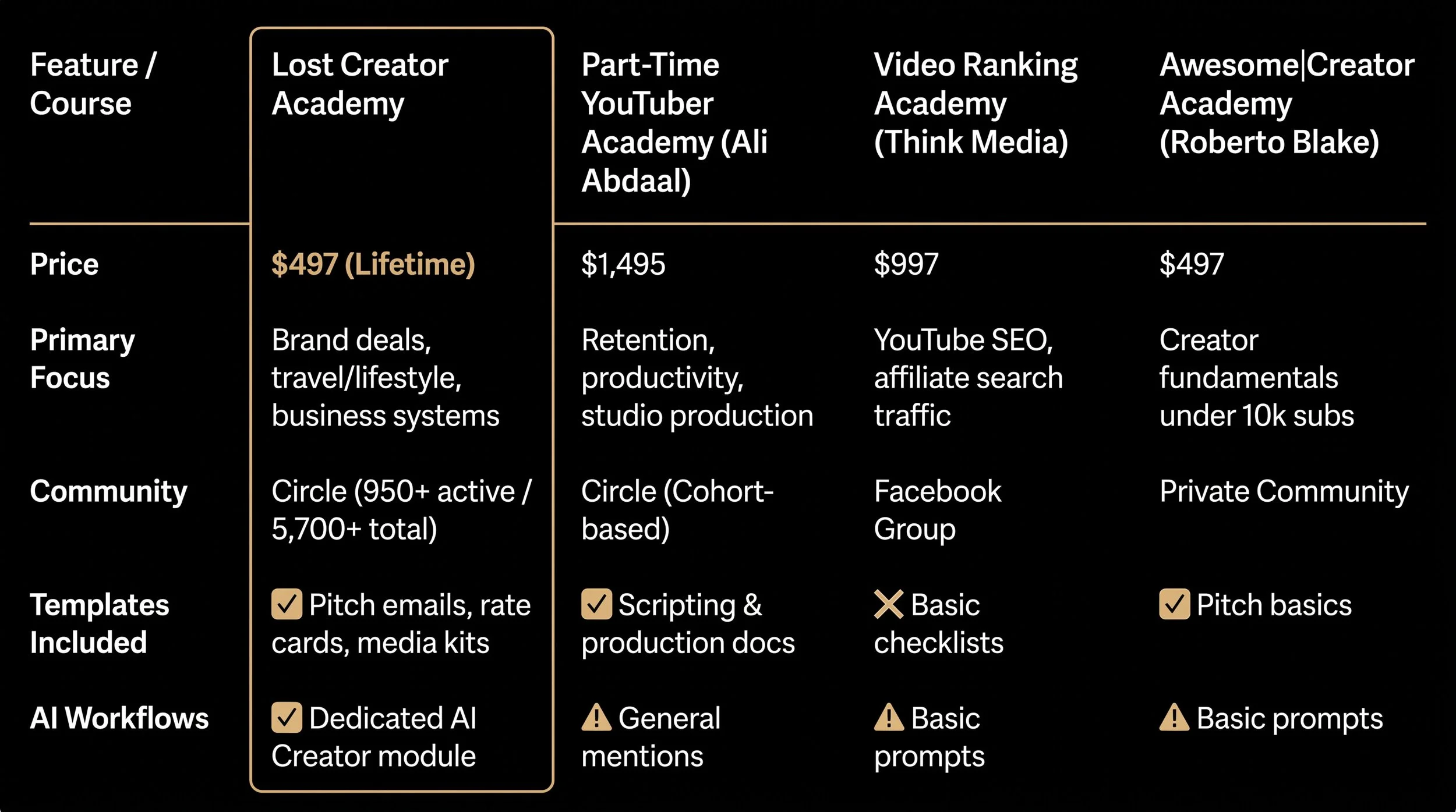
Prices and features can change, so check the current program pages before purchasing.
So which one would I choose?
For me personally, Lost Creator Academy is the better fit.
Even though my business has always been more focused on blogging, photography, travel and working with brands, the brand-pitching component of LCA was much more relevant to me than a course built almost entirely around YouTube.
The pitch templates were one of the first things I actually put into practice. They helped me understand how to approach brands professionally, how to position what I could offer and, perhaps most importantly, gave me the confidence to actually press send.
I've used that knowledge to approach brands and create collaborations around photography, video, travel and products. Some opportunities were paid, while others resulted in free products, accommodation or experiences. That distinction matters because I don't want to make it sound like every collaboration I had was a six-figure brand deal.
→ Check out Lost Creator Academy
The biggest difference for me: LCA isn't just about one platform
This is probably the most important distinction I'd make.
I didn't join LCA because I wanted to become a YouTuber.
I joined because I wanted to figure out how to turn the skills I already had in photography, travel and content creation into actual opportunities.
That's why sections covering brand pitching, photography, videography, and the business side of content creation ended up being much more useful to me than simply learning how to grow a particular social platform.
And then there's the community.
I've found the LCA community particularly valuable because it's made up of creators working across different platforms and disciplines. You can ask a question about pitching a brand, photography, video, blogging or content creation, and there is usually someone with relevant experience who can help.
That's difficult to compare on a simple feature table, but after being a member since 2021, it's probably the biggest reason I'd choose LCA again.
My simple recommendation
Choose Lost Creator Academy if you want to build a broader creator business around photography, video, blogging, social media and brand partnerships.
Choose Part-Time YouTuber Academy if YouTube is your main platform and you want a more structured YouTube-focused system.
Choose Video Ranking Academy if your biggest priority is YouTube SEO, search traffic and discoverability.
Choose Awesome Creator Academy if you're looking for creator fundamentals with a strong YouTube orientation.
If you're primarily a photographer, I'd also consider whether you actually need a creator-business course at all. If your only goal is to become better at photography, a specialised photography course could be a better use of your money.
For me, however, LCA offered the broadest match for the business I was trying to build.
→ Check out Lost Creator Academy
If You Only Want to Improve Your Travel Photography
There's one situation where I wouldn't recommend spending $497 on Lost Creator Academy. If you simply want to become better at taking travel photos with your phone, you don't need a creator-business program.
That's a completely different problem.
LCA makes more sense if you want to understand the wider creator business: working with brands, creating different types of content, building an audience, pitching yourself and eventually turning those skills into income.
If your goal is simply "I want to take better photos when I travel," I'd choose a photography-specific course instead.
That's actually why I created Mobile Photography Mastery. It focuses specifically on helping you take and edit better travel photos using your phone, without needing to learn how to build a YouTube channel or pitch brands.

Final Verdict: Is LCA Worth $497 in 2026?
After being a member since 2021, I would still buy Lost Creator Academy today.
But that doesn't mean I think everyone should.
I'd recommend it if you're serious about building a creator business and want to learn how the different pieces fit together: content creation, photography, video, YouTube, personal branding, audience growth, pitching brands and monetisation.
I'd especially consider it if you're trying to build a YouTube career. YouTube is a significant part of the training, and there is a lot of strategy around creating videos people actually want to watch.
I'm not a YouTuber myself, but I still benefited from those principles because the underlying ideas around storytelling, thumbnails, packaging and getting people to click translate well to blogging and other content formats.
I'd think twice if you only want to learn photography, aren't interested in working with brands, don't want to create content consistently, or are looking for a passive-income shortcut.
My own experience has been very practical. I used the pitching templates to approach brands, developed my photography and videography skills, generated several thousand euros through brand collaborations, and eventually built a wedding videography side business that generated well into five figures over two years.
LCA didn't do those things for me.
I did.
But LCA helped me understand what was possible, gave me practical tools to get started and, perhaps most importantly, gave me the confidence to put myself forward.
The community has been the biggest long-term benefit for me. The training is extensive, but having other creators around you to ask questions, share ideas and collaborate with makes the experience considerably more valuable.
So, is Lost Creator Academy worth $497?
For me, absolutely.
I paid around $800 when I joined and would still make the investment again.
Just don't buy it expecting the course to build the business for you. It gives you the tools. What happens next depends on what you actually do with them.
FAQ - Lost Creator Academy

-
No, it is not free. The current price is $497 as a one-time payment, or 3 monthly payments of $197.
The payment options and pricing can change, so check the current LCA offer before purchasing.
The amount of resources and value provided by Lost Leblanc in this online course is the top of the content creator game. You won’t find up-to-date resources like this anywhere else ( I dare you to find it). But joining the Lost Creator Academy is not only about the video lessons.
You will also get access to our online creator academy with more than 5000 members, where we share daily tips and support each other on our journey via Zoom calls or even meet-ups.
Think of it like university, where you will meet your best buddies for life, but without having to spend thousands of dollars and potentially being able to make your money back within a few months.
-
There is a 10% discount available to those who attended the free 1 hour training at the very end.
You can click here to access the Lost Creator Academy discount.
-
Christian Leblanc runs a few times per year competitions or discounts promotions, the biggest one being on Black Friday.
-
No.
YouTube is an important part of LCA, and many members join specifically because they want to build a YouTube career. However, I'm primarily a blogger and photographer and I've still found the YouTube training useful.
The principles around storytelling, thumbnails, packaging content and getting people to click translate well to blogging and other platforms.
-
No.
One of the biggest lessons I took from LCA was that you don't necessarily need hundreds of thousands of followers before approaching a brand.
You need to understand who you're targeting, what you can offer them and why your content would be useful.
A smaller but relevant audience can be more valuable to a brand than a huge audience that has nothing to do with its target customer.
-
No.
You can use the skills taught in LCA to work as a photographer, videographer, blogger, UGC creator, freelancer or other type of content creator.
My own experience has been much more focused on creating content for brands and businesses than becoming a traditional influencer.
-
Yes, but I'd make one distinction: beginner-friendly doesn't mean quick.
There's a lot of material inside LCA, so if you're starting from scratch, you'll need to spend time learning and practising.
I actually see the amount of content as both a strength and a weakness. There's plenty to learn, but you shouldn't expect to consume the entire course in a weekend.
-
Yes, particularly if you want to turn your blog into part of a broader creator business.
That's exactly how I've used it. I didn't use LCA to become a YouTuber. I used the brand, photography, video and business training alongside my blog and social channels.
The community has also been useful because there are other bloggers and creators inside LCA who understand the challenges of creating content consistently.
-
Yes there is a one-hour free creator training where you can learn the 10 steps to go from beginner to pro and the 5 steps to escape the 9-5.
You can access it here.
-
At the time of writing, it is possible for those who take part in the 1-hour free training to receive a 10% discount. Watch training here.
-
No, you don't need to buy a huge amount of equipment before joining.
However, some of the training uses professional tools such as Lightroom, Final Cut Pro and other creative software. If you want to follow those sections closely, you'll need access to the relevant tools.
I'd recommend starting with the equipment and software you actually need rather than buying everything mentioned in the course.
-
The Facebook group was archived in 2026. All existing and new members now connect inside a dedicated Circle community at lost.community
-
Yes, LCA includes a 14-day refund policy, allowing you to review the curriculum risk-free.
-
The course doesn't make you money by itself.
In my case, what I learned contributed to paid brand collaborations, photography work and a two-year wedding videography side business.
I've also received free products, stays and other opportunities through collaborations.
The important distinction is that I still had to pitch brands, create the work and find the opportunities myself.
Have questions about my experience with Lost Creator Academy? Leave a comment below or reach out to me on Instagram.


PIN ME


Have you ever downloaded presets for Lightroom mobile all excited about your purchase, only to realise that you are not getting the results wanted on all your photos like it was promise? Here is the solution.